Make your topper be part of the day in a special way. Choose a topper that will look great on the cake, will delight your guests and will make a welcome addition to your curio cabinet. It will stay with you long after the day is just a memory. So make sure it is something that will make you happy when you see it!
Wednesday, July 25, 2012
Wedding Cake Toppers
Even though you will be front and center all day, you will also be
sitting atop that luscious wedding cake as wedding cake toppers.
Imagine that all eyes will also be on this topper. And long after the
day is over the porcelain creation will remain as a special memory of
that eventful day.
Make your topper be part of the day in a special way. Choose a topper that will look great on the cake, will delight your guests and will make a welcome addition to your curio cabinet. It will stay with you long after the day is just a memory. So make sure it is something that will make you happy when you see it!
Make your topper be part of the day in a special way. Choose a topper that will look great on the cake, will delight your guests and will make a welcome addition to your curio cabinet. It will stay with you long after the day is just a memory. So make sure it is something that will make you happy when you see it!


Wedding Decorations
Wedding decorations add the atmosphere
to your special day and set the tone. Although they seem to remain in
the background they are subliminally in the front of everyone's
minds. Do the colors coordinate well with the wedding party's attire
or do they deter from it?
The wedding favors should be
coordinated with your decorations. And you can make the decor quiet
and subdued but you may want to make them quite obvious. Just think
of how bright colors brighten up and lighten up the jovial
atmosphere. After all, even though all eyes will be on you they will
also be viewing the surroundings and who doesn't want to remember
beautiful place settings, flowers and décor.
Saturday, July 21, 2012
Wedding Cake Toppers
Make it a day to remember, your
wedding day. Everything should be special and out of the ordinary. So
why should your wedding cake toppers be any different? Just think of
how the day will be remembered. How can you make this day stand out
in not only your memory but your guests' memory as well? By doing
the unexpected.
So go ahead, don't follow the usual trend,
select wedding cake toppers that make attendees stand up and notice.
They may be talking about this day for years to come thinking of
that out of the ordinary wedding cake.and you will have that
wonderful porcelain wedding cake topper for years to come as a
keepsake
Wedding Decorations
Do you like bold beautiful colors? Use
that idea to choose wedding decorations for your wedding day. So many
choose subdued tones just because they are afraid of showing their
real colors. But always be the real you. Besides ,your guests want to
know the real you. For the day, you and yoru significant other are
the stars and everyone attending your event wants to know more about
both of you.
What better way to show them than to
reflect that in your wedding decorations?
Don't forget to give everyone something
to take with them that will create a memory of that event for years
to come, a unique wedding favor.
Thursday, July 19, 2012
Wedding Cake Toppers
Of course the bride and groom are the center of attention for a wedding but after that ,the most attention is given to the wedding cake. And what takes center stage with that is wedding cake toppers! Of course there is the traditional bride and groom.
But why not really put your unique stamp on this day and make it your very own by having a unique wedding cake topper. Just think of the possibilities!
From choosing statues that resemble the happy couple or bring out some other traits and interests that are unique to both of you. And most of all since they are produced in hogh quality porcelain it will be a keepsake to remember that specia lday!
But why not really put your unique stamp on this day and make it your very own by having a unique wedding cake topper. Just think of the possibilities!
From choosing statues that resemble the happy couple or bring out some other traits and interests that are unique to both of you. And most of all since they are produced in hogh quality porcelain it will be a keepsake to remember that specia lday!
Wedding Decorations
When planning a wedding you can't begin to pick out the venue or attire without first having a notion of the wedding decorations. Today you can be so creative and unique and pick out yourown original theme.
Colors or attire can coordinate with decoration colors and themes. You now can really make the day your own, inspired by your life together and your event. There are so many choices that you will really want to sit down and spend some briansotmring time with your significant other.
Pick out decoration colors and theme and then plan your attire to coordinate with that. It will steamline planning and give you a direction to follow whether or not you havea wedding planner.
Colors or attire can coordinate with decoration colors and themes. You now can really make the day your own, inspired by your life together and your event. There are so many choices that you will really want to sit down and spend some briansotmring time with your significant other.
Pick out decoration colors and theme and then plan your attire to coordinate with that. It will steamline planning and give you a direction to follow whether or not you havea wedding planner.
The Tempest in a Teapot or Coffee Pot

Guest Blogger: Chelsea Pullano
In Act 3 of Shakespeare’s The
Tempest, some of the company’s weary travellers come upon a
feast laid in the forest. It is the spirits of Prospero, fallen Duke
of Milan, who laid this sumptuous meal to taunt his visitors, and
while they are struck down by the sprit Ariel before consuming such
speech, it can be imagined what delicacies would have been served at
the table of the past Duke of Milan. The most important food items in
Milan include milk, cream, butter, cheese. Unlike many other Italian
cities, the cuisine of Milan features almost no tomato. Many of
Milan’s dishes are based around cheeses, particularly mascarpone
and ricotta. This can be seen not only in the city’s foods, but in
the names of it’s towns, such as Crema and Cremona, which lend
themselves to thoughts of cheeses and milks. Rice tends to be more
popular than pasta in Milan, largely because rice absorbs cheeses and
butters better than pasta does.
Another prominent character in The
Tempest is the King of Naples. Naples draws its culinary trends
from many different areas that have occupied it over the ages,
including the Spanish, Greek, and French. The 18th century
is when Neapolitan cuisine first emerged as a distinct identity.
Naples is the original home of the pizza, and since 2004 Neapolitan
pizza ingredients have been regulated by law, requiring particular
types of yeast and flour, natural mineral water, peeled tomatoes
or fresh cherry
tomatoes, marine
salt and extra virgin olive
oil. Spaghetti is another popular dish associated
with Naples. Sweet dishes are a favorite of the city, including
gelato and pastries such as zeppole,
babà,
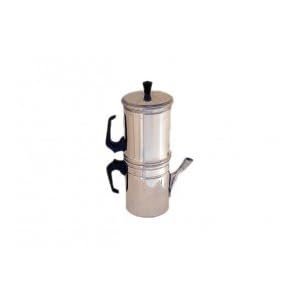
and sfogliatelle. Neapolitan coffee is likewise widely
acclaimed, and the cuccuma, or the Neapolitan flip coffee pot,
was the inspiration for the espresso machine.
And if you are able to catch this production at the Pennsylvania Shakespeare Festival or one of Shakespeare's other masterpieces with super talented directors, producers, actors...
And for more food info, recipes, travel info, join 100,000 worldwide subscribers at www.marialiberati.com and The Basic Art of Italian Cooking by Maria Liberati tm
Saturday, July 7, 2012
Labor of Love
Guest Blogger: Chris Manganaro
Obsession
is most often seen as something bad. Sometimes it is hard to
completely understand someone else's obsession because we simply do
not share it with them. It can be tough on everyone involved when
obsession takes over.
In
William Alexander's book 52
Loaves: One Man's Relentless Pursuit of Truth, Meaning, and a Perfect
Crust,
the reader is witness to the obsession of one man and one bread.
William wants to try and replicate the perfect bread that he once
tasted by baking a loaf of bread a week for one year, hence the title
of 52
Loaves.
Bread quickly becomes his obsession as he dedicates as much time as
possible to this new pursuit.
Due
to the author's wit, the book is able to keep from getting stale like
day old bread. Broken down into weekly increments for chapters, he
doesn't dwell on anything for too long and does his best to inject
humor even into the more informative sections of the book. Some
moments are more funny than others, but overall it is a humorous year
in the life. It is likely that the reader would not have wanted to
live with William, though.
As
the reader finds with baking bread, it is the little things that are
important. Small details really add to the charm of this book. At
certain points he puts a little notation of his current weight as
well as the weight of his bookshelf. This gives the reader a look
into the changes which occur over the course of a year. Another
wonderful idea which adds humor and more insight into the authors
thought process is the use of footnotes. These often lead to
laughter. William also gives you a lot to think about in this book.
It is split up into sections that won't make sense to some readers
until later in the book. It really comes together as a labor of love.
William
does include some recipes and tips at the end of the book in order to
help the home baker. Something to keep in mind; however, is that this
does not make it a cookbook. You may find what he has listed to be
useful in some way, though. Perhaps that little bit is just enough.
It was for him. There is also an index of books that he suggests for
those interested in bread making listed after the recipes. It seems
likely that he wanted to give aspiring bakers something to nibble on.
Trying
to understand another person's obsession may not always be possible
and William's book may or may not convince all of its readers either.
While many people can understand the importance of bread, the
meanings and lessons he learns may not appeal to everyone. His
adventure is unique just like each individual loaf he baked to find
the perfect one. This book is worth reading for anyone who has ever
enjoyed any kind of bread. Maybe it tells you more than you want to
know and maybe it won't make you enjoy bread any more than you
already do, but you will enjoy learning something new about your
daily bread.
For great recipes ,go to www.marialiberati.com. .where food meets art ,travel and life!
Wednesday, July 4, 2012
Meat Pies..Around ethe World
Guest Blogger :Chelsea Pullano
Mrs. Lovett, the character in Stephen Sondheim's famed musical, Sweeney Todd (recently appearing at the Pennsylvania Shakespeare Festival) is a woman well known for her
meat pies (despite her gruesome manner of preparation). A meat pie is
a pie with a filling of meat and other savory ingredients. Meat pies
are not common in the United States, but are a regular meal in
Britain, Canada, Ireland, Australia, and New Zealand. Greece, India,
and Middle Eastern countries often make meat pies as well. It
is important to note that there are many regional differences in the
contents of meat pies. An Irish meat pie is the Steak and Guinness
Pie, which consists of steak with Guinness
Stout Beer, bacon,
and onions.
In both Australia and New Zealand, the meat pie is a common
convenience food often found in gas stations and convenience stores.
Greek meat pies are called kreatopita and contain ground beef, onions
and feta cheese. Indian meat pies are called samosa
and usually contain peas, spiced potatoes, coriander, lentils, or
ground beef or chicken and are often served with chutney. Middle
Eastern meat pies are called sfiha
and contain ground beef, olive oil, plain yogurt, tahini,
allspice, onion, tomatoes and pine nuts. Latin American countries
often make a variation of the meat pie that is more portable, known
as a meat empanada, and Nigerian meat pies are also closer to this
design than the British meat pie represented in the play.
The earliest
meat pies can be traced back to the ancient Egyptians in the
Neolithic period. As early as 9500B.C. the Egyptians made pies from
oat, wheat, rye, and barley, and filled with honey and baked over hot
coals. With time, the Greeks adopted these pies, and it was in Greece
that a pie pastry crust made from flour and water was first filled
with meat. The Romans adopted the cuisine from the Greeks with very
few changes. The crusaders brought these recipes back to Medieval
Europe, where it became a dietary staple. Cooks used ingredients like
lard and butter to mold the flour-water mixture into the upright pie
we recognize today. From Europe, missionaries and explorers spread
the meat pie worldwide, where it has developed the many varieties
discussed above
Fleet Street, More Than a Barber Shop Locale
Guest Blogger: Chelsea Pullano
After Attending a truly entertaining production of Stephen Sondheim's Sweeney Todd at the Pennsylvania Shakespeare Festival .....decided to do some research on its' famed locale

Stephen Sondheim’s Sweeney Todd is based in the city of London, particularly on Fleet Street. Fleet Street is named after the River Fleet, the largest underground river in London. It was the origin of the British newspaper, and continued to be home to it up until the late 20th century. Reuters, the last major British news office to occupy Fleet Street, departed in 2005. However, to this day the name of Fleet Street is representative of the British press.

Fleet Street has retained its name for many hundreds of years. It was known as Fleet Bridge Street as early as the 1200s, and was known as simply Fleet Street by the following century. While the spelling has altered with the changing of the English language, the pronunciation has remained constant these many, many years. When it was first built, Fleet Street ran between the commercial city of London and Westminster, the political hub of the city. The East end of the street was marked by the River Fleet (which ran against the walls of the city), and the West end were the city limits of London (today marked by the Temple Bar). The size of the city prior to its expansion in the 14th century is marked today by the start and end of Fleet Street.
Fleet Street became a publishing center around the year 1500, when William Caxton's (the first to introduce a printing press t0 England, and the first English retailer of printed books) apprentice, Wynkyn de Worde, set up a print shop and Richard Pynson (one of the earliest publishers of English books) there. In March of 1702, The Daily Currant, London’s first newspaper, opened and began publishing from above an Inn on Fleet Street.
Besides its publishing business, Fleet Street was also noted for its taverns and coffee houses. Many notable men, such as Ben Jonson, John Milton, Izaak Walton, John Dryden, Samuel Johnson, Edmund Burke, Oliver Goldsmith and Charles Lamb, either lived on Fleet Street or frequented to taverns there.
Today Fleet Street is known for the law and its Inns of Court and barristers’ chambers. Many former offices of newspapers are now the offices of important financial or law companies. As recently as 2006, a few newspaper companies (most notably the Press Gazett) returned to Fleet Street or streets nearby. Besides Sweeney Todd, Fleet Street is also portrayed in a number of other fictional pieces, most notably Charles Dickens’ A Tale of Two Cities and Evelyn Waugh’s Scoop.
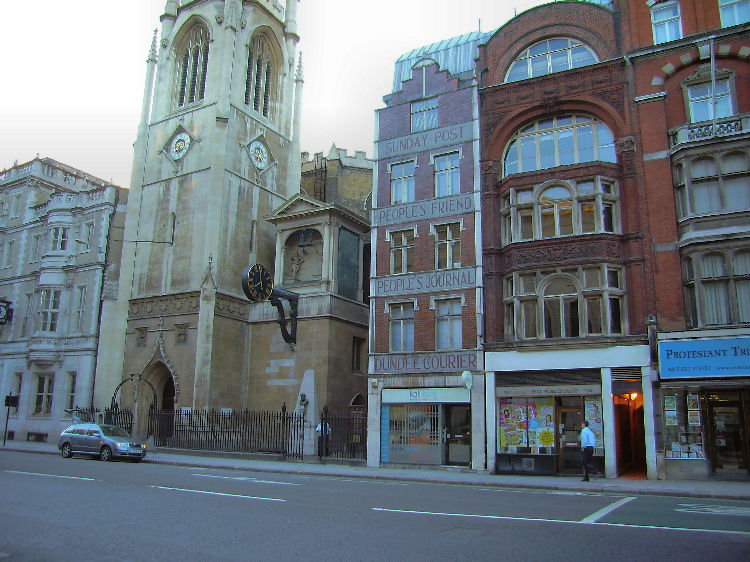
Stephen Sondheim’s Sweeney Todd is based in the city of London, particularly on Fleet Street. Fleet Street is named after the River Fleet, the largest underground river in London. It was the origin of the British newspaper, and continued to be home to it up until the late 20th century. Reuters, the last major British news office to occupy Fleet Street, departed in 2005. However, to this day the name of Fleet Street is representative of the British press.

Fleet Street has retained its name for many hundreds of years. It was known as Fleet Bridge Street as early as the 1200s, and was known as simply Fleet Street by the following century. While the spelling has altered with the changing of the English language, the pronunciation has remained constant these many, many years. When it was first built, Fleet Street ran between the commercial city of London and Westminster, the political hub of the city. The East end of the street was marked by the River Fleet (which ran against the walls of the city), and the West end were the city limits of London (today marked by the Temple Bar). The size of the city prior to its expansion in the 14th century is marked today by the start and end of Fleet Street.
Fleet Street became a publishing center around the year 1500, when William Caxton's (the first to introduce a printing press t0 England, and the first English retailer of printed books) apprentice, Wynkyn de Worde, set up a print shop and Richard Pynson (one of the earliest publishers of English books) there. In March of 1702, The Daily Currant, London’s first newspaper, opened and began publishing from above an Inn on Fleet Street.
Besides its publishing business, Fleet Street was also noted for its taverns and coffee houses. Many notable men, such as Ben Jonson, John Milton, Izaak Walton, John Dryden, Samuel Johnson, Edmund Burke, Oliver Goldsmith and Charles Lamb, either lived on Fleet Street or frequented to taverns there.
Today Fleet Street is known for the law and its Inns of Court and barristers’ chambers. Many former offices of newspapers are now the offices of important financial or law companies. As recently as 2006, a few newspaper companies (most notably the Press Gazett) returned to Fleet Street or streets nearby. Besides Sweeney Todd, Fleet Street is also portrayed in a number of other fictional pieces, most notably Charles Dickens’ A Tale of Two Cities and Evelyn Waugh’s Scoop.
Subscribe to:
Posts (Atom)