Former International Supermodel turned Celebrity Chef/Award Winning Author Maria Liberati, author of the best selling book series The Basic Art of Italian Cooking and the Gourmand World Cookbook Award Winner The Basic Art of Italian Cooking: Holidays & Special Occasions-2nd edition.
Blog Information and Disclaimer
Wednesday, July 23, 2008
Sunday, July 13, 2008
Le Marche
For more information about Le Marche, visit http://www.le-marche.com/.
Monday, July 7, 2008
Campania
The third largest city in Italy, Naples (Napoli) was founded in 600 B.C. and was once a Greek trading center. Its name originated from the Greek word Neapolis, meaning “new city.” Towering over Naples is Mount Vesuvius, the still active volcano that destroyed the infamous ancient city of Pompeii in 79 A.D. Some artifacts recovered from Pompeii, as well as other intriguing discoveries like 4th century B.C. tomb paintings, can be viewed at Museo Archeologico Nazionale di Paestum. The bustling, chaotic city of Naples is located on the shores of a beautiful bay and there is no better place to view the picturesque scenery than at the Castel Sant’Elmo, a star-shaped castle atop the area’s largest hill.
For those who crave to be surrounded with such beauty, Capri is quite literally an island paradise. Though accommodation there can be considerably pricey, the natural wonders visitors experience make it worth the cost. For over 2,500 years, tourists have been making their way to the island, including Julius and Tiberious Caesar, who had summer villas built there. Capri is rife with splendor. Of all its wonderful natural attractions, be sure not to miss Grotta Azzura (Blue Grotto). The Blue Grotto makes for a charming excursion; after entering (the entrance is only about 3 feet high), travelers will observe the brilliantly unique way that light refracts on the water, creating a display of colors and silvery reflections.
For more information about these and more destinations in Campania, a great site to visit is http://www.trips2italy.com/Campania.
Monday, June 30, 2008
Emilia-Romagna
According to Trips2Italy.com, Emilia-Romagna is a region of Italy that was once known as “the breadbasket of the Roman Empire.” With a rich history of fine cuisine, it is responsible for many of the culinary treats people take advantage of worldwide, including Parmesan cheese and prosciutto di Parma.
The city of Bologna is not only the capital of Emilia-Romagna; it is also known as one of the culinary capitals of Italy. It is called by many names: “Bologna la Grassa” (Bologna the Fat) because of its gastronomic specialties, “Bologna the Learned” because it is home to the oldest university in Europe (founded in 1088), and “Bologna the Red” because of the rust colored roofs on the city’s buildings. A great place to begin exploration of Bologna is at Le Due Torre, or theThe city of Modena is also an important area of culinary art, though other industries take precedence. In modern times, the auto (Ferrari, Lamborghini, etc.) and ceramic industries are held in Modena’s highest regard. Culture is also an incredibly important aspect of daily life, and the people of the city are undoubtedly proud to boast that it was the home of Luciano Pavarotti.
For more information about tourism in Emilia-Romagna, a great site to visit is http://www.emiliaromagnaturismo.it/english/.Saturday, June 21, 2008
Veneto
Thursday, June 12, 2008
Piemonte
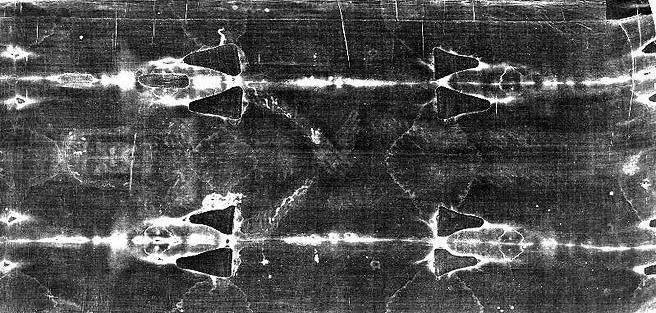
http://www.shroud.com
For more information on Piemonte itself, please visit http://www.regione.piemonte.it/lingue/english/.
Tuesday, June 10, 2008
Abruzzo
Parco Nazionale d’Abruzzo (the National Park of Abruzzo), with its headquarters in the province of L’Aquila, is a perfect spot to experience Abruzzo’s natural wonders. It acts as a habitat for a variety of animals, including, according to initaly.com, some once endangered species like the Apennine lynx and the Marsican bear. Several tree species compose the forests that grow over most of the park and house these creatures. The fact that there is only a single paved road cutting through Parco Nazionale’s 150,000 acres adds to its sense of seclusion. To really experience the park, a person should either hike at least one of the roughly 150 walking trails—information about them can be found at any of the seven visitor centers available—or bike along any of the countless unpaved roads.
www.initaly.com/regions/abruzzo/parco
Away from the mountains and wilderness, Abruzzo’s other shining feature is undoubtedly its coastline. With nearly 130 kilometers of beaches spotted with resorts, Abruzzo has long been a popular place for both Italians and foreign travelers to spend their summer vacation time.
For more information about Abruzzo, visit http://www.inside-abruzzo.com/en/.
Sicilia
The largest island in the Mediterranean, the Italian region of Sicily (Sicilia) has successfully meshed together aspects of several Mediterranean cultures (Greek and Roman, Arab and Norman, Spanish, French, and Italian) to form its own unique identity. Aside from its eclectic culture, Sicily boasts many frozen impressions of times past, as well as Etna, the highest volcano in Europe, standing 3,323 meters tall.
Situated in southeast Sicily, Siracusa (Syracuse) is a place where history is extremely visible. Once a powerful Greek and then Roman city, temples and theaters from ancient times still stand to remind Siracusans of their past. The Tempio di Apollo (Temple of Apollo) is one site that truly reflects Siracusa’s complicated history. The temple was built in the 6th century BC on Siracusa’s island of Ortygia and stands as the oldest Doric peripteral temple in the world, according to www.Sacred-Destinations.com. Originally, the temple is said to have been built to honor Apollo, though Cicero wrote that it was in dedication to Artemis. Before long, the temple was converted
into a Byzantine church, then into a Muslim mosque, and then back into a church.
No matter where you are in Sicily, there is one distinctive feature of the region that cannot be avoided: the food. Sicilian cuisine is treasured worldwide. Due to its numerous outside influences, the cuisine is an interesting mix of fish, homegrown foods, Italian pastas, and foreign ingredients.
Friday, May 23, 2008
Toscana
Pisa, a city known more for its architecture than its art, is located about 60 miles west of Florence. Though the Torre Pendente (leaning tower) has become Pisa’s signifying symbol, there is so much more to the city to explore. Even in the Campo dei Miracoli (Field of Miracles), the piazza where the Torre Pendente is located, are other beautiful and historic pieces of architecture including a Duomo, a Bapitstry, and a graveyard.
Also in June, Pisans compete in the Regatta of Saint Ranieri, a race between four boats representing the four historic districts of Pisa, with rowers costumed in Medieval dress. On the last Sunday in June in Pisa, a historic battle (the battle of the bridge) is recreated into a sort of tug of war contest across a central Pisan bridge.
Aside from these two famous cities, Tuscany is full of wonder and beauty. For more information about Tuscany, visit http://www.discovertuscany.com/.
Monday, May 19, 2008
Count Giovanni Pico della Mirandola: Part I
In 1484, Count della Mirandola went to Florence. he soon become one of the most active members of Lorenzo d'Medici's Platonic Academy. He was also the most active supporter of Italian Neoplatonism. The Count studied Hebrew and wrote an essay on the reconciliation between Chrisitanity and Platonic philosophy.
In 1487, the Count was forced to withdraw 13 of his propositions. In 1488, he was arrested because of his clash with Pope Innocent VIII.